
As a small business in Philadelphia, we all are accustomed to the grind of how can streamline workflows and cut costs works? The ever-growing competition, raising costs, and never-ending compliance, juggling one million tasks to keep the lights on.
Do you know there is an easier way to streamline workflows?
‘Operational efficiency improvement’ aren’t just the buzz words: it is the magic. It turns the chaos into smooth operations. What’s more? It turns those nagging costs shave off without compromising on the business it streamline workflows.
Haven’t we witness small shops, cafes, and startups bogged down by the outdated process that are only eating up resources.
Time to bring in some more buzz words: operational efficiency strategy / streamline workflows! Don’t judge from the fancy titles, if you are focused on getting the best results, these words are your savior.
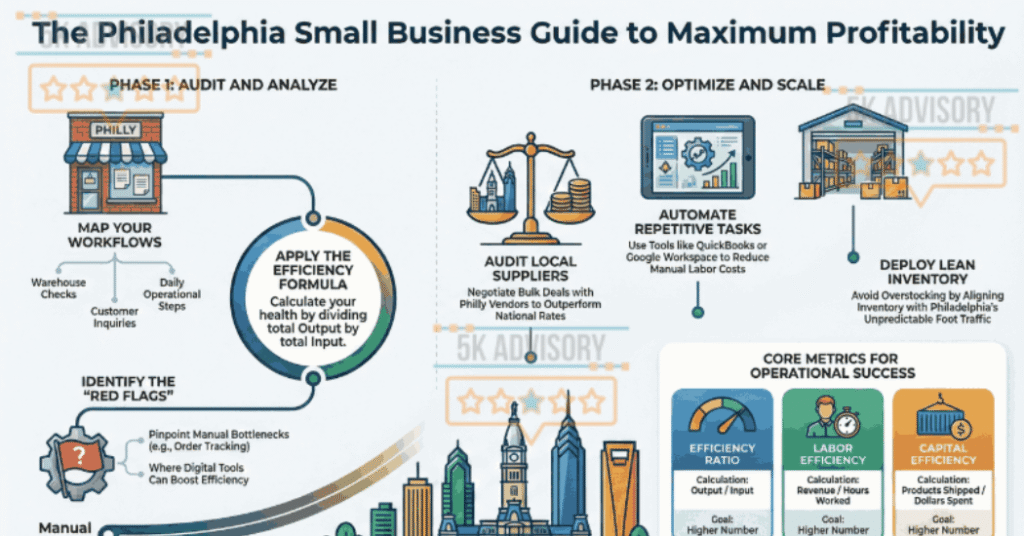
Mapping Out the Streamline Workflows
For the ease of understanding, let’s break it down. You can’t fix what you don’t understand, right? Kick off with an effective strategic planning process to streamline workflows. Grab a notepad (or your favorite app—I’m old-school, but hey, whatever works) and map out every step in your daily operations.
From inventory checks at your Fishtown warehouse to handling customer inquiries in Old City, list it all.
Here’s a simple tip: Use the streamline workflows formula to gauge where you’re at. It’s basically Output divided by Input, think revenue generated per hour worked or products shipped per dollar spent. If that number’s dipping, it’s a red flag.
For example, one local bakery was losing hours on manual order tracking. They switched to a basic digital tool, and boom, their efficiency shot up 30%.
If you’re scratching your head on how to crunch those numbers, why not give it a shot yourself? Plug in your data and see the gaps. Ready to dive in?
Still lost, don’t sweat, talk to the expert, and be worry free to streamline workflows.
You cannot be accountant, operations manager, creative head, executioner, and customer care service all at time.
Smart Cost-Cutting Without the Pain
Let’s proceed to the juicy part: cost cutting strategies Philly-style.
Everyone loves a good deal, like snagging cheap eats at Reading Terminal Market, but applying that savvy to your business? Priceless.
Why don’t you start by auditing your suppliers. Fortunately, Philly’s got a network of local vendors who might offer better rates than those big chains.
Best part: you can negotiate bulk deals or switch to energy-efficient lighting in your storefront to trim utility bills.
Automation is your best friend here. Tools like QuickBooks or even freebies like Google Workspace can handle repetitive tasks, cutting down on labor costs. And don’t forget about outsourcing non-core stuff, think payroll or IT support.
Philadelphia small business process improvement tips aren’t rocket science; they’re practical moves that keep more cash in your pocket.
Pro tip: Work on your team with these tweaks. If costs are still soaring up, think of deploying lean inventory methods to avoid overstocking. This works best for Philly’s unpredictable foot traffic.
Leveling Up Tech and Tools Without Breaking the Bank
Our city is constantly buzzing with inventions. From Penn’s tech hubs to the startup scene in University City, businesses do not have options not to leverage tech for operational efficiency improvement.
Cloud-based software for project management, like Trello or Asana, can streamline workflows without a huge upfront cost. If you’re dealing with remote teams (shoutout to those hybrid setups post-pandemic), video tools keep everyone aligned.
In fact, this model has been great for businesses who want to test waters before physically diving in the competitive market. The key? Start small, test, and scale. Don’t overwhelm your crew with too many changes at once.
Frequently Asked Questions
What is operational efficiency?
Operational efficiency is all about maximizing output. You can reduce resources such as money, time, and staff while maximizing waste. To make it comprehendible, output divided by input, running smoother operations, and boost profits by cutting quality.
How to improve operational efficiency in hospitals?
Using EHRs and telemedicine, you can reduce the paperwork and care time. with the help of case management, device tracking, staffing using data analysis, and real-time billing models to capture revenues accurately.
How to improve operational efficiency in manufacturing?
Use lean principles to eliminate waste and bottlenecks. Invest in automation and AI to reduce repetition. Train the staff for improved productivity, optimize supply chain with just-in-time inventory, and data monitoring.
Your Path to a Leaner, Meaner Operation
At the end of the day, boosting operational efficiency isn’t about cutting corners. It more than that!
It’s about building a business that thrives in Philly’s fast-paced world.
Implement these strategies, track your progress with that operational efficiency formula, and you’ll see the difference in your bottom line and your sanity.
Feeling inspired but not sure where to start? Let’s make it happen, drop a comment below with your biggest pain point, or better yet, schedule a free consultation with a local efficiency expert.
Your business deserves it. And if you’re ready to overhaul your processes, head over to resources like the Philadelphia Small Business Development Center for tailored advice.
What’s stopping you? Take that first step today and watch your small business soar with 5K Advisory.